
Touch Panel

View Products:

Why Use a Touch Panel Display?

A touch panel display provides a centralized, intuitive way to view, configure, and manage tank measurement and alarm data across one or many tanks. Instead of relying on individual gauge displays or control room systems alone, a touch panel brings critical information like level, temperature, alarms, and system status into a single, visual interface that operators can interact with directly.
Touch panels reduce operator workload, speed up decision-making, and improve situational awareness by presenting complex tank data in clear graphics, trends, and summaries rather than raw numbers or disconnected signals.
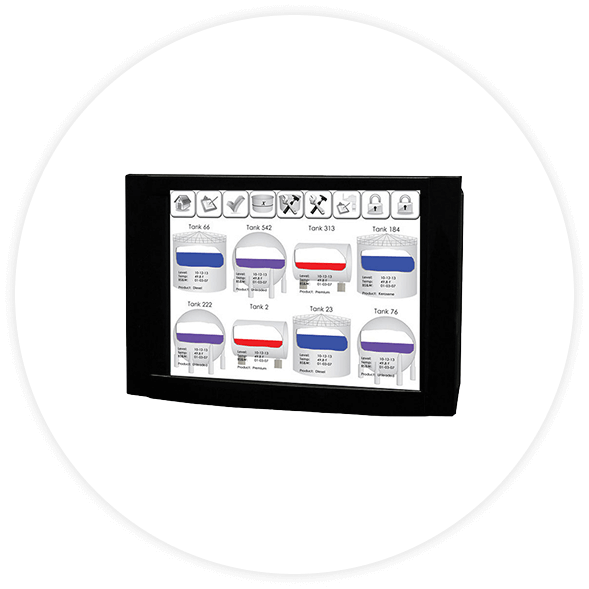
MCG 3630 — Touch Panel Tank Monitor

MCG 3630 — Touch Panel Tank Monitor

Choose the MCG 3630 when you need a centralized, touchscreen tank monitor that displays level, temperature, BS&W, and inventory data across multiple tanks with flexible protocols and easy configuration.
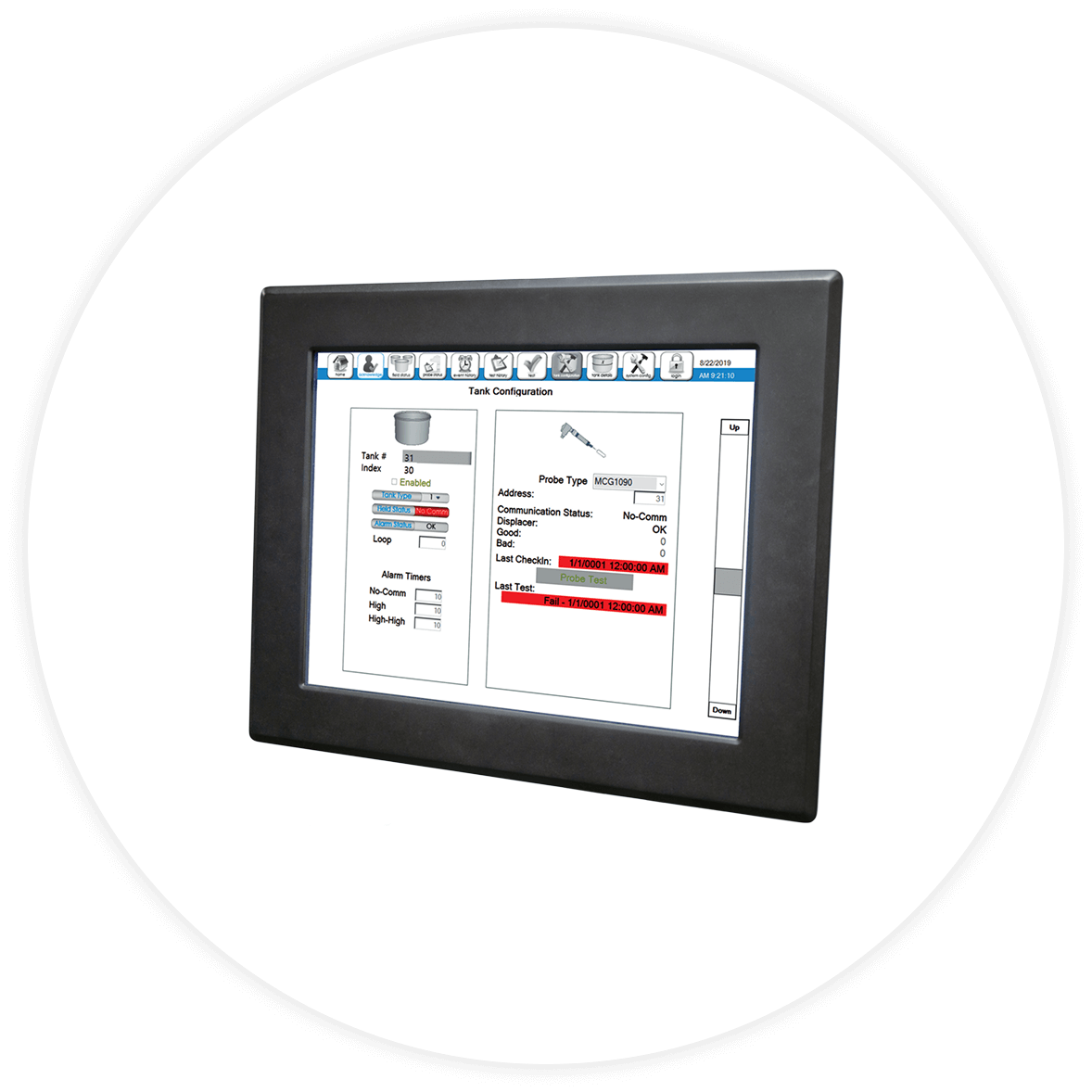
MCG 7030 — Touch Panel Alarm Monitor

Choose the MCG 7030 for an independent, self-testing high-level alarm system that continuously monitors alarm probes, ensures regulatory compliance, and delivers reliable alarm visibility, even without a gauging system.

What Applications and Use Cases Use a Touch Panel Display?

Touch panel displays are commonly used anywhere multiple tanks, instruments, or alarms need to be monitored and managed together. Typical applications include:
Tank farms and terminals monitoring multiple tanks simultaneously.
Independent high-level alarm and overfill prevention systems.
Inventory management and custody-transfer support.
Facilities integrating radar, servo, temperature, and alarm probes.
Retrofit projects upgrading legacy systems to modern interfaces.

Remote or unmanned sites requiring clear local visualization.

Touch panels are often deployed at control buildings, pump stations, or field enclosures, acting as the local human-machine interface between field instruments and higher-level SCADA or inventory systems.

Why Add a Touch Panel Display to Your Level Measurement Package?

Adding a touch panel display transforms individual instruments into a coordinated system. Operators can view tank status at a glance, acknowledge alarms, review event history, and configure devices without specialized tools or laptops. This improves safety, reduces response time, and helps ensure alarms and measurements are properly understood and acted upon.
In overfill prevention and regulatory applications, touch panels provide clear alarm annunciation, event logging, and system visibility, helping operators demonstrate compliance while reducing the risk of missed or misunderstood alarms.

Touch Panel Displays: Centralized Control and Visibility for Tank Measurement Systems

Touch panel displays serve as the command center for modern tank gauging and alarm systems. Connected to level gauges, temperature probes, and alarm devices, the display continuously polls field instruments and presents real-time information through an intuitive touchscreen interface. Operators can view tank level, temperature, product data, alarm status, and trends across multiple tanks from a single screen.
L&J touch panels are designed for industrial environments, using embedded controllers and rugged touchscreens that eliminate the need for keyboards or mice. The graphical interface allows users to configure tanks, set alarm thresholds, acknowledge events, and review alarm history directly at the display. Communication options support multiple protocols, enabling seamless integration with existing gauging systems, alarm probes, and host control or inventory software.
Installation typically involves mounting the panel in a control room or field enclosure and connecting it to tank instruments via serial, Ethernet, or wireless communication. Flexible configuration supports everything from small single-site systems to large multi-tank facilities, with options for redundancy, remote communication, and hazardous-area compatibility.
Cognesense touch panel displays stand out by offering deep, native integration with L&J level gauges, alarm probes, and transmitters, not just passive visualization. By combining real-time data, alarm management, and system configuration in one platform, they give operators clearer insight, faster response, and greater confidence in their tank measurement and safety systems.