

Radar level gauges use microwave signals to measure level without ever touching the liquid. A radar transmitter sends energy into the tank’s vapor space, and the system calculates level by measuring the time or frequency shift of the echo that returns. This non-contact approach delivers reliable measurement even in harsh environments where mechanical or guided-wave devices struggle.Because nothing touches the liquid, radar avoids contamination, resists buildup, and tolerates extreme temperatures, pressures, and vapors.
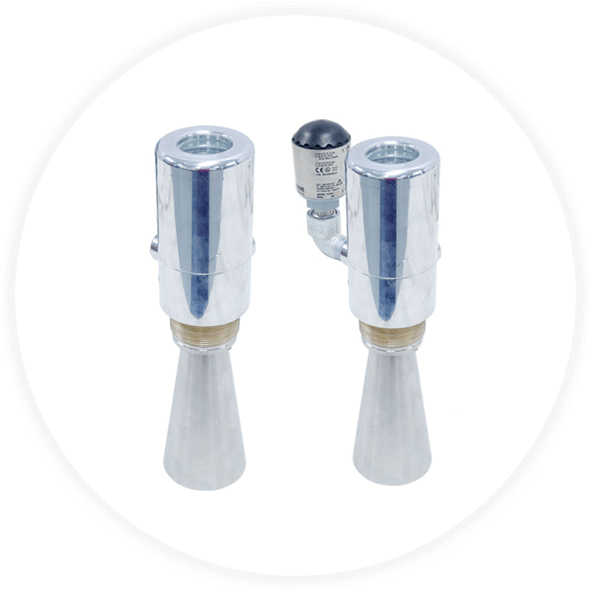
It eliminates process contamination, tolerates extreme temperatures and pressures, performs in vacuum or high-pressure environments, and provides dependable measurement in large tanks, spheres, floating-roof tanks, and more.
Successful installation depends on proper antenna selection and placement. They should be mounted vertically and positioned away from walls, nozzles, and obstructions. Larger antennas deliver narrower beam angles for improved focus in challenging geometries or low-dielectric fluids.
Engineered to be the trusted choice for terminals, refineries, chemical plants, and utilities that require accuracy without compromise, Cognesense’s radar gauges build on these principles with proven field reliability, custody-transfer accuracy, and seamless integration with existing level measurement architectures.
When accuracy, reliability, and long-term simplicity matter, radar is the most advanced and maintenance-free way to measure level.
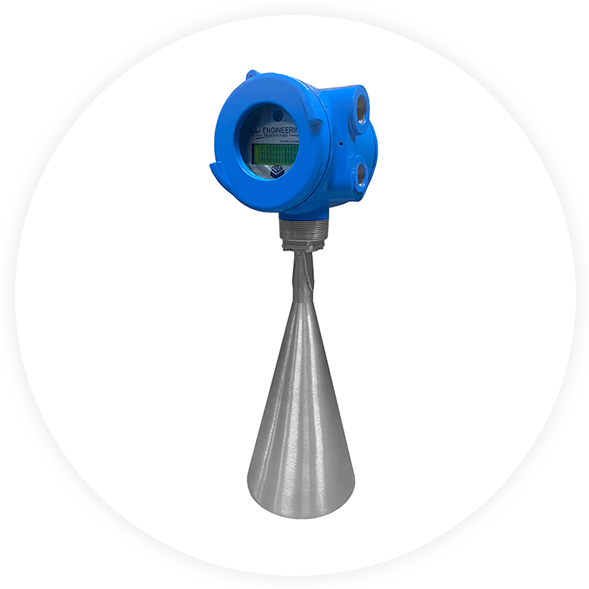
For users moving high value inventory like refined fuel and crude oil, choose the evo1610 for OIML certified custody transfer accuracy down to 0.5 mm.
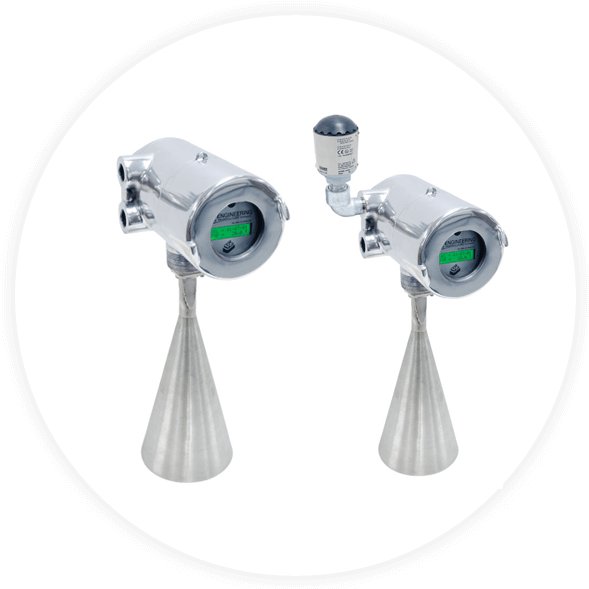
The MCG 1600SFI is great for a broad range of products, from asphalt blending tanks to cryogenic materials due to a broad antenna offering. It offers full I/O and legacy protocol support for retrofitting and complementing older technologies.
Users with tanks that need an updated, continuous level gauge for redundant backup to contact level measurements like servos and float and tape gauges use the evo 2600 for it’s easy installation and simple 5 step e.Cal calibration wizard.
Global custody-transfer standards such as OIML R85, API MPMS and ISO 4266 emphasize continuous verification, traceability, and control of total measurement uncertainty. API MPMS and OIML methodologies for calculating corrected volumes are also built on the principle of cross-checking level, reference height, and tank calibration data. To meet these expectations in real-world tank environments, most operators rely on dual, independent level measurements to validate accuracy and detect drift before it impacts fiscal volumes.
| Technology Category | Where They Shine | How They Complement Radar |
|---|---|---|
|
Servo Gauges |
Interface, density, hybrid measurements |
Servo level gauges complement radar because they add secondary sensing for custody transfer and density measurement that radar alone cannot provide. |
|
Float & Tape / Gauge Boards |
Mechanical, no-power visual indication |
Float & tape level gauges complement radar because they provide mechanically independent redundancy for API compliance and operator preference. |
|
Capacitance / Magnetostrictive |
Interface detection, multi-float level, confined spaces |
Capacitance and magnetostrictive level gauges complement radar because they deliver additional data points—such as interface and water bottom levels—that enhance radar’s continuous level measurement, especially in pressurized tanks and underground storage tanks. |
|
Ultrasonic, Capacitive, Microwave, and Other Switches |
Binary high-level alarms; harsh or dusty solids applications |
Ultrasonic and microwave switches complement radar because they provide independent safety trip layers that are essential for meeting API 2350 requirements. |
| Technology | Best At | How It Supports / Complements Radar |
|---|---|---|
|
FMCW Radar |
Primary continuous level, non-contact, high accuracy, low maintenance |
Forms the core measurement. All other technologies add redundancy, safety, or special-purpose sensing that radar does not provide. |
|
Servo |
Density & interface profiling |
Pairs with radar in custody-transfer tanks requiring density, temperature, and interface measurement. |
|
Float & Tape |
Local mechanical indication |
Provides visual backup and redundancy—especially in remote terminals. Essential when radar fails for power is lost. |
|
Magnetostrictive |
High-precision interface + product |
Works with radar to give two-layer measurement (product + water bottoms). |
L&J Technologies offers three radar level gauges—evo 1610, MCG 1600SFI, and evo 2600—so plant engineers can match accuracy, range, communication architecture, and cost to their specific tank-gauging needs.
Each radar is purpose-built for a distinct tier of performance:
The evo 1610 is the go-to radar when every millimeter affects revenue. Built for custody transfer and regulated storage, it ensures audit-ready accuracy, stable performance, and confidence in every transaction—ideal for refineries, fuel terminals, and chemical facilities that cannot afford measurement disputes.
The MCG 1600SFI is perfect for modernization projects and diverse tank conditions. With built-in I/O, wide protocol support, and antennas for any product, it drops into existing systems easily and handles everything from clean fuels to asphalt, cryogenics, and reactors with dependable, high-precision measurement.
The evo 2600 brings digital accuracy to everyday inventory tanks. Easy to install and configure, it replaces float-and-tape or older analog gauges with stable, low-maintenance performance—ideal for wastewater, utilities, bulk liquids, and general process tanks where reliability and ease of use matter most.
This three-tier lineup ensures every tank—from a refinery custody-transfer installation to a wastewater utility sump—can be gauged precisely with the right level of functionality.
| Model | Measuring Range | Accuracy | Use When You Need | Best Suited For |
|---|---|---|---|---|
|
0 – 85 ft (26 m) |
± 0.5 mm (OIML R85 Certified) |
Highest accuracy for custody-transfer and fiscal inventory measurement with certified metrology |
Fuel terminals, refineries, chemical storage, ethanol plants |
|
|
0 – 75 ft (23 m) standard; up to 180 ft (55 m) optional |
± 0.5 mm |
Field-proven, configurable radar that can directly interface to analog I/O, relays, and multiple protocols without extra modules |
Process tanks, crude oil, asphalt, molten sulfur, LPG/LNG, solids |
|
|
0 – 65 ft (20 m) standard |
± 3 mm |
Reliable non-contact radar for everyday inventory or float-and-tape retrofits |
Utilities, bulk liquid tanks, powders and slurries |
| Model | Core Role | Range | Accuracy | Key Specifications | Primary Applications |
|---|---|---|---|---|---|
|
OIML R85-certified custody-transfer radar |
26 m (85 ft) |
± 0.5 mm |
Certified accuracy, digital protocols (Fieldbus/Modbus), requires 1650 for I/O expansion and Modbus communication |
Custody transfer, refined product and chemical storage |
|
|
Process-grade radar with native I/O & protocol flexibility |
55 m (180 ft) |
± 0.5 mm |
Built-in relays & analog I/O, multi-protocol without Smart Core, antenna variety |
Process tanks, crude, LPG/LNG, molten sulfur, asphalt |
|
|
General-purpose radar for inventory and retrofit use |
20 m (65 ft) |
± 3 mm |
Simple loop-powered 26 GHz FMCW, graphical display and e.CAL wizard |
Bulk storage, utilities, water, powders and slurries |