

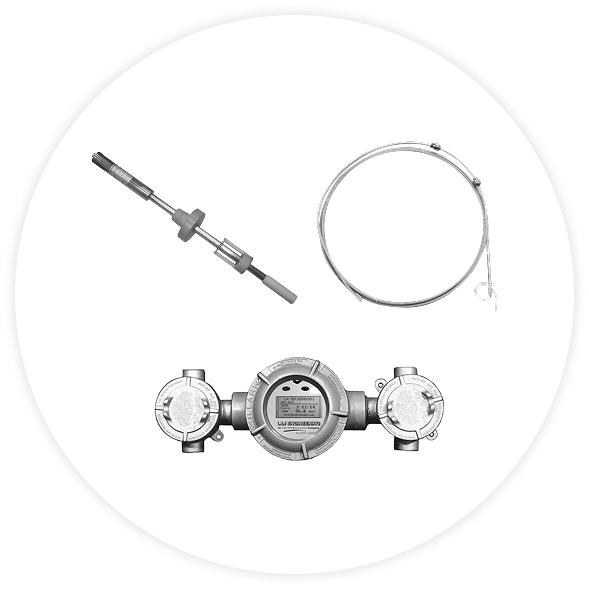
The result: absolute, repeatable level measurement with no recalibration drift.
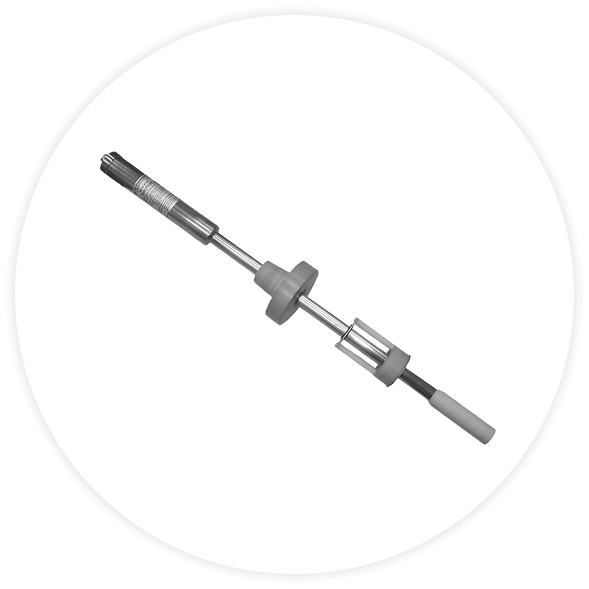
Choose the MCG 8150B when you need precise product and interface measurement, BS&W detection, and average temperature data in rigid-mounted tanks—paired with the 1010M for high-resolution magnetostrictive accuracy.
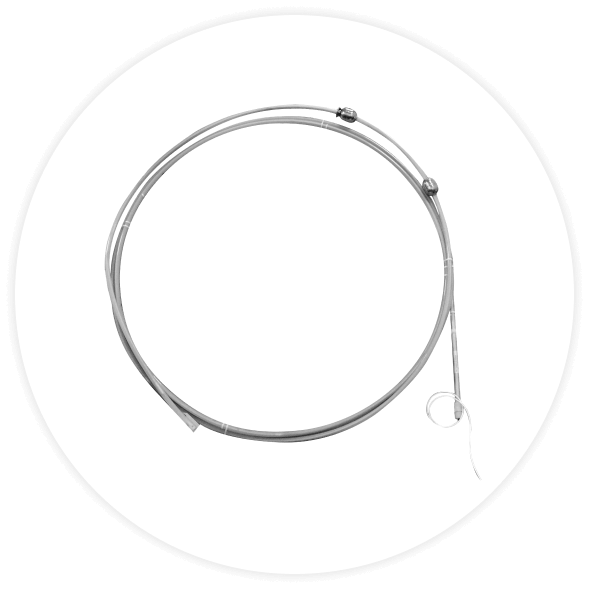
Choose the MCG 8151 when tall or underground tanks require flexible installation with accurate product/interface levels, BS&W, and temperature profiling—used with the 1010M for continuous high-resolution measurement.
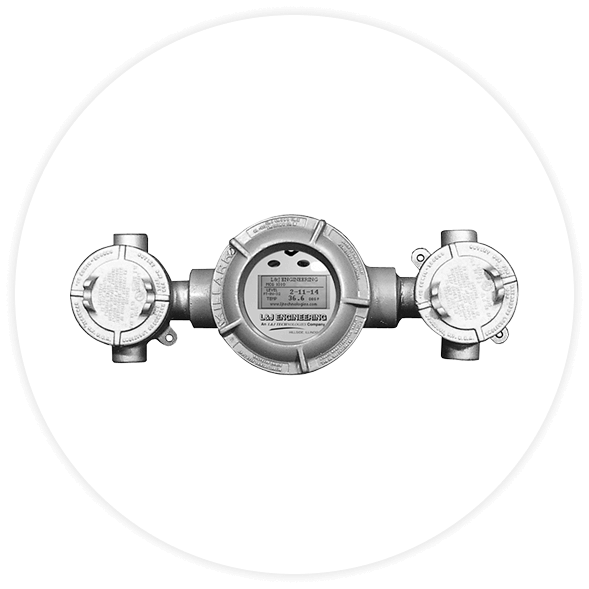
Use the MCG 1010M whenever an 8150B or 8151 probe is installed, delivering continuous high-resolution level, interface, BS&W, and temperature data for critical specialty applications.
| Technology | How It Complements Servo Gauges |
|---|---|
|
Underground Storage Tanks (USTs) |
Provides product and water-interface detection with sub-millimeter accuracy for regulatory compliance and leak prevention. |
|
Pressurized Spheres & Bullets |
Handles high-pressure hydrocarbons safely; float designs resist thermal expansion and vapor pressure effects. |
|
Refineries & Petrochemical Terminals |
Ensures custody-transfer precision with integrated temperature profiling and API 2350 overfill protection. |
|
Chemical Process Vessels |
Immune to dielectric or vapor changes; suited for corrosive or viscous media using stainless-steel or coated probes. |
|
Water & Wastewater Systems |
Monitors level and interface in sumps, clarifiers, and separators. |
|
Renewable Fuels & Biogas |
Detects oil/water or phase separation in digesters and storage tanks. |
|
Food, Beverage, and Pharma |
Cleanable, sanitary options with minimal maintenance. |
Global custody-transfer standards such as OIML R85, API MPMS and ISO 4266 emphasize continuous verification, traceability, and control of total measurement uncertainty. API MPMS and OIML methodologies for calculating corrected volumes are also built on the principle of cross-checking level, reference height, and tank calibration data. To meet these expectations in real-world tank environments, most operators rely on dual, independent level measurements to validate accuracy and detect drift before it impacts fiscal volumes.
While a single level gauge provides the primary reading, a complementary technology (such as servo + radar or radar + mechanical) creates the independent reference point these standards assume for maintaining certified accuracy classes and proving metrological integrity over time.
In practice, the accuracy and verification framework defined by OIML, ISO 4266, and API MPMS is best satisfied by a redundant level-measurement architecture—one instrument serving as the primary custody device, and a second providing the independent confirmation needed for auditability, traceability, and long-term measurement confidence.
| Complementary Technology | Where It Shines | How They Complement Magnetostrictive Gauges |
|---|---|---|
|
Servo Gauges (e.g., MCG 1500 SFI) |
Custody transfer, density, and hybrid measurement applications requiring metrological accuracy. |
Servo gauges enhance magnetostrictive systems by providing a secondary, independent reference for custody transfer and real-time density measurement, enabling redundancy and traceability in regulatory or fiscal operations. |
|
Radar Gauges (e.g., EVO 1610 / EVO 2600 / MCG 1600SFI) |
Non-contact, high-accuracy measurement in vapor, foam, or high-temperature conditions. |
Radar provides non-contact verification of product level and performance under varying vapor or temperature conditions—ideal for cross-validation and redundancy in critical tanks or custody applications. |
|
Float & Tape / Gauge Boards (e.g., Varec 2920+2500, MCG 2000 + 92021) |
Mechanical simplicity, visual indication, and reliability without power. |
Float & Tape systems act as a mechanical backup for magnetostrictive probes, ensuring API 2350 compliance and operator visibility during power or signal loss conditions. |
|
Capacitance Level Probes (Cap Analog) |
Interface detection, confined spaces, or smaller process vessels. |
Compact capacitance or secondary magnetostrictive probes can be used for local interface or water-bottom detection—providing additional process insight where main tank probes are impractical. |
|
Ultrasonic / Microwave / Capacitance Switches (e.g., Sonac, Microwave, Captrol) |
Point-level safety interlocks and overfill prevention. |
Switches establish independent alarm layers and fail-safe protection as required by API 2350, offering discrete high/low-level trip points to supplement continuous magnetostrictive measurement. |