
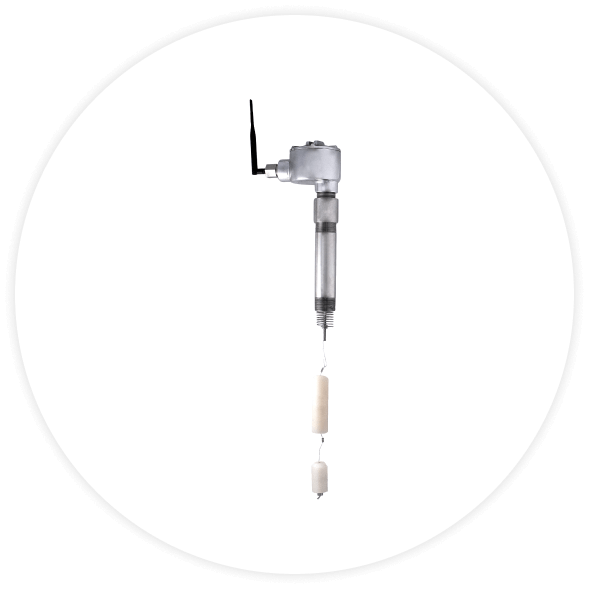
MCG 1095 — Wireless Level Alarm Probe

Overview

MCG 1095

For Terminal Operators, Safety Engineers, Compliance Managers, Tank Farm Supervisors, and EPCs who need a reliable and safe solution for overfill prevention and regulatory compliance, the MCG 1095 Wireless Level Alarm Probe provides a proven solution. This probe offers true self-testing and wireless monitoring to simplify installation and reduce maintenance costs. Unlike typical probes that only test electronics, the MCG 1095 physically moves its displacer to simulate an alarm event, ensuring the full mechanical and electrical system is functional. Its wireless design eliminates the need for wiring, making it ideal for remote locations and retrofits, while remote self-checking and automatic reporting enhance safety and reduce field work.

Features

True Self-Testing

The probe goes beyond typical electronic tests by physically moving the displacer to simulate a real alarm event. This verifies the full mechanical and electrical integrity of the system, guaranteeing the alarm will trigger when needed.

Wireless Operation

Powered by a long-life lithium battery, this probe operates without any wiring. This drastically cuts installation costs and time, making it perfect for remote sites and tank retrofits where running new conduit is expensive or impractical.

Remote Self-Checking

When connected to an MCG 7030 Touch Panel Alarm Monitor, the probes can be automatically tested from the control room. This reduces the need for manual site visits and dangerous tank climbs, enhancing overall safety.

Fire Code Compliance

Fire Code Compliance

The MCG 1095 meets all requirements for independent, reliable alarms, which is a critical factor for compliance with fire codes governing the storage of hazardous and flammable liquids.

Battery Monitoring

Battery Monitoring

The probe continuously checks its battery status and provides instant alerts for low power or other abnormal conditions, ensuring the device is always operational.

Details

Applications

The MCG 1095 is an essential safety component for a range of critical applications:

Technical Specifications

Table Header Table Header
Mounting Connections
1.5-inch or 2-inch NPT; 1.5-, 2-, 4-, or 6-inch flanges.
Alarms
Hi, Hi-Hi, Lo
Self-Testing
Automatic (L&J Tankway), Manual (24 VDC), or None
Materials
304 SS Housing (Standard), Nylon Displacer (Standard); optional 316 SS or Graphite displacers.
Power
Lithium battery (1+ year life)
Integration
Compatible with MCG 7030 Touch Panel Alarm Monitor and MCG 3900 Inventory Management System.

Documents and Downloads

Product Flyer

Have a look at the flyer to get all the tech specs and product features. Brochure

User Manual

Read the manual for detailed information and instructions. Manual

Calibrations

Check out a sample cert from our calibration lab. Certificate

Contact Support

If you have a question that we have not covered then just get in touch and we’ll be happy to help.

FAQs

We have tried to answer the most common questions we are asked here.

 A standard electronic test only verifies the electrical circuit is intact. The MCG 1095’s “true self-test” physically moves the displacer to confirm that both the mechanical and electrical components are functioning correctly. This physical verification provides a higher level of assurance that the alarm will work when a real overfill condition occurs.

The wireless function eliminates the need for expensive and time-consuming trenching, conduit runs, and wiring to each tank. This allows for quicker, less disruptive, and more cost-effective installation, especially for retrofits. It also enhances safety by reducing the need for personnel to work on high-voltage wiring in hazardous zones.

The probe is powered by a long-life lithium battery, typically lasting over a year. The MCG 1095 continuously monitors and reports its battery status to the connected system, such as the MCG 7030 Touch Panel. You receive an alert well in advance of a low-power condition, ensuring the probe is always operational and ready to protect your assets.