
Float and Tape Transmitters

View Product:

Turning Trusted Mechanical Gauging Into Precise, Digital Tank Intelligence

Float and tape transmitters modernize one of the industry’s most reliable level-measurement methods by converting mechanical float movement into accurate, continuous electronic data. In a traditional float and tape gauge, a buoyant float rises and falls with the liquid surface, driving a tape and pulley system that provides a highly intuitive local indication. A transmitter enhances this system by monitoring the tape position electronically and sending real-time level information to the control room via analog or digital signals.

These transmitters deliver the best of both worlds: operators retain the inherent reliability, no-power indication, and long life of float and tape gauges, while gaining automated data acquisition, remote monitoring, temperature integration, and compatibility with today’s inventory and safety systems. Modern transmitters can sit directly atop an existing gaugehead, capturing float movement with precision gearing, optical encoders, or magnetic sensing, all while delivering accurate readings, even during power outages or communication disruptions.
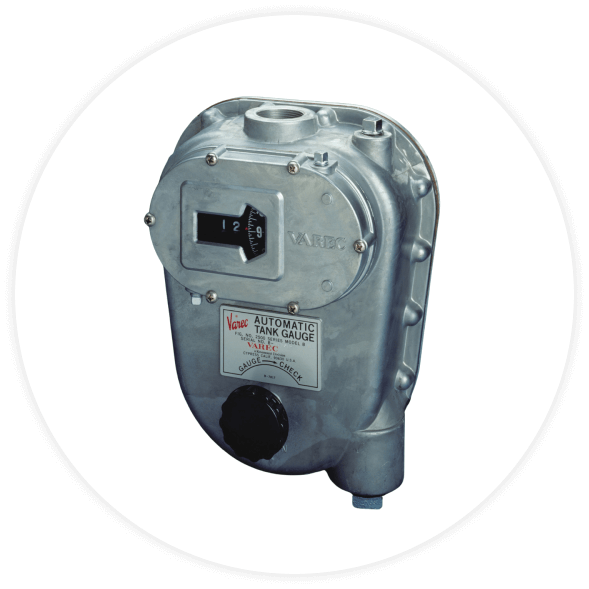
Installation follows familiar float and tape practices: Mount the transmitter to the gaugehead, ensure proper tape tension, and connect power and signal wiring. Once configured, the transmitter continuously reports level and optional temperature information over 4–20 mA, HART, or digital protocols like Modbus, providing a seamless path to automated inventory systems and API 2350 overfill-prevention architectures.
Cognesense transmitters are engineered to upgrade any mechanical gauge with exceptional accuracy, robust environmental protection, and advanced diagnostics. They are designed for easy retrofit, long-term reliability in hazardous locations, and proven compatibility with both legacy and modern tank farm infrastructures. For operators who depend on the durability of float and tape but need the intelligence of a digital system, Cognesense transmitters are the trusted choice.
Float and Tape Transmitters

When to Use a Float and Tape Transmitter

Use a float and tape transmitter system when you need a proven, mechanical level gauge to continuously indicate product level — while also transmitting that data electronically to a control system, DCS, or tank gauging network.
A float and tape transmitter (like the L&J MCG 2000MAX or Varec 2920 FTT) mounts directly to a float-and-tape gauge such as the Shand & Jurs 92021 or Varec 2500. As the float follows the liquid surface, the transmitter’s absolute magnetic encoder converts the mechanical movement into an electronic signal representing precise level and temperature. That signal can then be transmitted via 4-20 mA, HART, Modbus, Tankway, or other fieldbus protocols.

The result: Operators retain the reliability and local indication of a float and tape gauge, with the convenience and integration of a modern digital measurement system.

Best-Fit Applications

Float and tape transmitters are best suited for:

Bulk liquid storage tanks — fixed-roof, floating-roof, and cone-roof designs.
Petroleum terminals and tank farms requiring visual indication with remote readout.
Chemical and petrochemical plants where redundancy and mechanical backup are valued.
Water, wastewater, and food & beverage facilities that prefer non-electronic primary measurement with electronic monitoring.
Hazardous and classified areas, thanks to Class I, Div 1 / ATEX / IECEx approvals.

Typical pairings include the S&J 92021 or Varec 2500 mechanical gauge plus the MCG 2000MAX transmitter, providing both mechanical indication and digital output for SCADA or inventory systems.
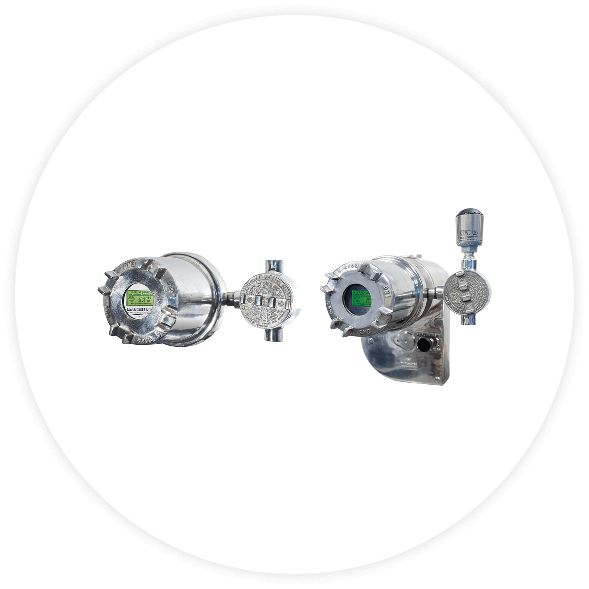
MCG 2000MAX — Level Transmitter

MCG 2000MAX — Level Transmitter

For operators who want reliable digital level, temperature, and alarm data while preserving the simplicity, durability, and proven performance of their existing mechanical gauges.

Why Use Float and Tape + Transmitter

Choose a float and tape with transmitter when reliability, simplicity, and field-proven mechanical design are essential.

Situation Why Float & Tape + Transmitter Excels
Existing Mechanical Gauges In Service
Transmitters retrofit easily without replacing the gauge — a low-cost modernization path.
No Power Or Limited Infrastructure
The MCG 2000MAX supports 2-wire loop-power (0.07 W) operation — no batteries or external supply needed.
Hazardous Or Remote Tanks
Explosion-proof and intrinsically safe designs (ATEX/IECEx) enable safe operation in Class I, Div 1 environments.
Need For High Accuracy And Mechanical Redundancy

Magnetic absolute encoding delivers up to 1⁄32 inch accuracy, while the float and tape system provides direct, visible level indication.

Power Interruptions Or Comms Loss
Absolute encoding means the transmitter never “loses position”; it resumes correct level automatically after power is restored.
Corrosive Or Heavy Product Applications
Mechanical systems with appropriate floats and tapes are unaffected by vapor density, dielectric constant, or foam.
By contrast, radar or servo gauges may offer higher automation but require more power, installation complexity, or dielectric-specific calibration. A float and tape + transmitter provides a robust, intrinsically safe, and cost-effective solution that bridges mechanical reliability with digital connectivity, giving level measurement redundancy all monitored by self checks within our software.

In Summary

A Float and Tape Transmitter System — pairing a Shand & Jurs 92021 or Varec 2500 gauge with an L&J MCG 2000MAX or Varec 2920 FTT — delivers the best of both worlds: mechanical dependability and electronic intelligence for accurate, maintainable level monitoring across demanding industrial applications.