The release of API 2350’s fourth edition serves as a reminder that preventing tank overfills and spills by using appropriate technology is something that cannot be ignored.
For Phillips 66, having reliable level gauging technology with overfill protection isn’t only vital, but essential for its day-to-day operations. As an innovator for level gauging, overfill alarms, inventory management systems and wireless instrumentation, L&J engineering prides itself on utilizing cutting edge technology to help facilities stay in compliance with industry regulations and recommendations. To ensure their facility conformed to overfill regulations, Phillips 66 took the initiative to be proactive and installed L&J engineering’s MCG 1090 High Level Alarm Probe and MCG 7000 Alarm Monitor independent overfill protection system.
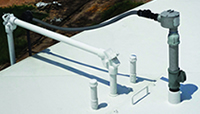
Phillips 66 has an MCG 1090 High Level Alarm Probe installed at all of their aboveground storage tanks and on their sump tanks. The key components of the MCG 1090 features a displacer hung from a spring loaded shaft with a magnetic tip. As product is moved, the weight of the displacer moves causing the spring to raise the magnetic shaft. This would, in turn, trip an alarm switch that would relay a digital signal to the remote MCG 7000 Alarm Monitor System. What makes the MCG 1090 unique is its integrated solenoid coil, which provides complete self-testing capabilities. This self-testing feature can be triggered remotely providing the operator with a means of testing his high level probes without ever leaving the control room and without the risks of testing on top of the storage tank.
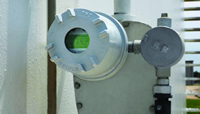
“The L&J engineering system not only serves as an accurate overfill alarm but also delivers the independent overfill protection that we were looking for,” Noel Cordova, Phillips 66 I&E Technician, said. “All of our tanks are outfitted with a MCG 2000MAX Transmitter and an MCG 1090 High Level Alarm Probe to make sure we have reliable level detection and overfill protection. The benefit of the MCG 1090 is its self-test feature. We have our alarm monitor set to test the probe and its communication every morning and we have all of that data communicate directly to our control room.”
To monitor the MCG 1090 Level Alarm Probes remotely, a MCG 7000 Alarm Monitor system is used. The MCG 7000 offers automatic self-checking of the alarm probes, printouts and discrete outputs for horns, emergency shut-off, as well as an optional host communications port. So in the event of product levels reaching a high set point, the operator will be immediately notified to take appropriate action from the control room. Featuring all requirements for an independent alarm system, the MCG 7000 includes an optional battery pack and charger to operate the system during power outages. Up to 100 separate alarm probes can be monitored by the MCG 7000 using a single, 4 wire data highway. The system uses an 80 character LCD to provide immediate alarm data, and a paper tape printer to automatically print alarms as they occur and for output of a daily event log.
“We have benefited greatly from installing the MCG 2000MAX. The transmitter has a reduced number of parts and provides greater reliability,” Noel said. “L&J engineering has pushed transmitter and encoder technology forward to provide an unmatched accuracy and reliability in the transmitter market,” Jim Jannotta, L&J engineering Product Manager, explained.
Just as with the previous generations of MCG 2000’s, the MCG 2000MAX uses no batteries and operates as an absolute encoder, which does not require recalibration after a power failure. When power is restored, the MCG 2000MAX is unaffected and will accurately reflect the current level.
This article was featured in part in Tank Storage Magazine.